What it's all about

When you have a product idea, how do you get to a point where task tickets can be written and the implementation can start? Product specification bridges that gap.

In this process, we’ll work together to refine your idea in greater detail, clarifying which features are essential and which are nice to have. We’ll also provide you with a complete overview of all the tasks needed to bring your product to life, including their complexity and associated costs. This transparency empowers you to make an informed decision about the scope of your Minimum Viable Product (MVP).

By the end, you’ll have a well-documented implementation strategy and a written specification that outlines the expected behaviors of the MVP. You'll also have a clear understanding of the time and budget required.

With this clarity, you’re ready to move forward with confidence and the implementation can start!

How it works

The goal is to develop a robust, extendable implementation strategy that can grow with the product — not to produce a quick MVP that will need to be fully rewritten down the line.

Gain domain knowledge

We start by exploring your project idea together. This means asking the right questions, identifying the core problem you’re solving, and building a shared understanding of what the product should achieve.

We take the time necessary to understand the problem space deeply. This pays off, as it ensures that every decision, from implementation to design, stays aligned with real user needs and business goals.

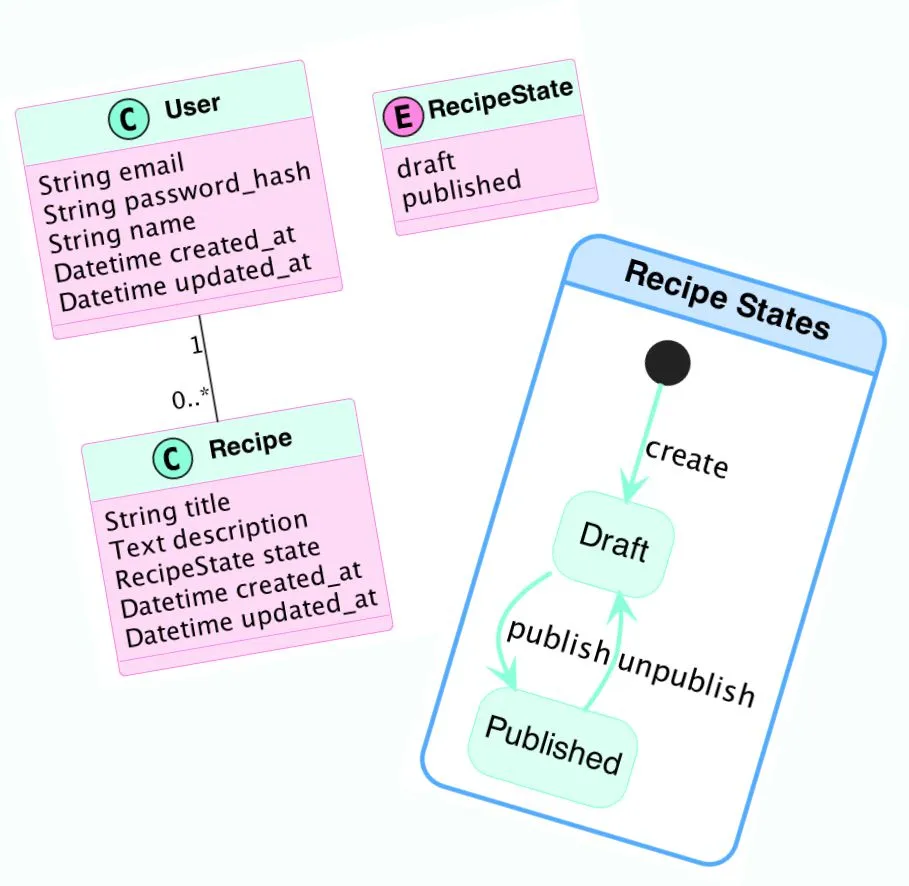
Different types of visualisation - a datamodel and a state diagram

Develop an implementation strategy

Next, we develop an implementation strategy. Our goal is to keep it as simple as possible, but still extendable in all the ways that can be foreseen.

Using structured visuals like data models, sequence diagrams, flow charts, and state machines, we create specifications of the features & functionality. These documents are accessible to non-developers, and can be added directly to the project’s code repository as living documentation, to be used as technical specification during implementation.

Design the user experience

If your product idea requires new workflows, we use user personas and user stories, storymapping, wireframing, and click-through prototypes to design a workflow and user interface that feels clear and intuitive to navigate.

You can read more about our UX design process here.

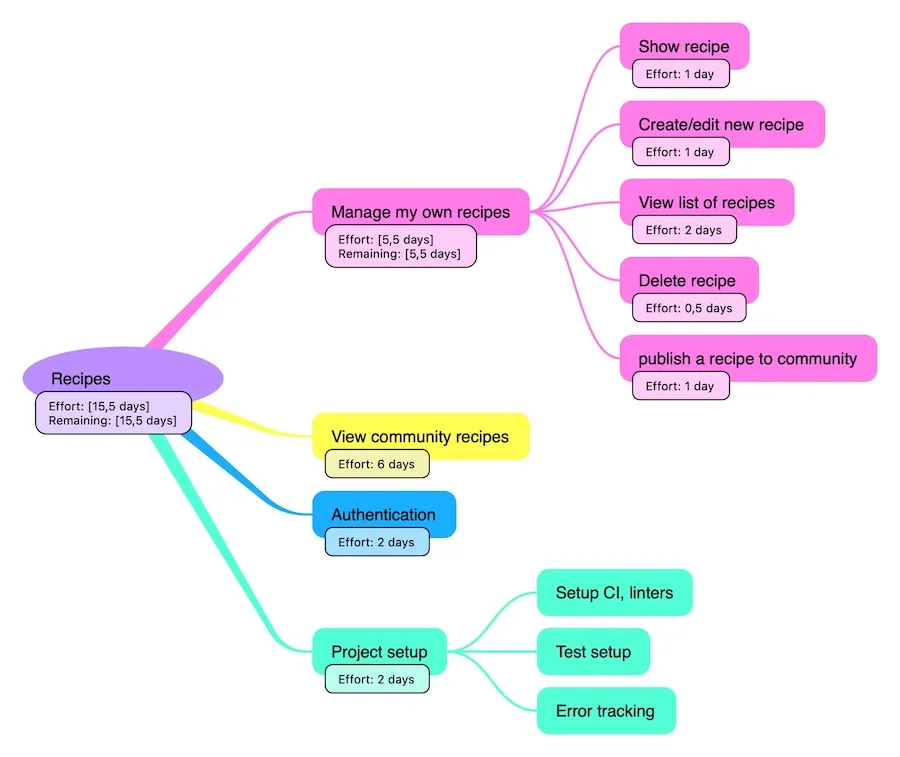
A mindmap showing the tasks of a project with estimations

Map the full picture

By creating a mind map, we capture everything that needs to be implemented — all the features and tasks that are necessary to bring the product to life. This includes actual features like “Admin UI: Manage Accounts”, but also project setup like “Setup CI”.

Mind maps give you great visual overview of a project, while still showing details.

We estimate the work effort of each bubble of the mind map, so the mind map shows the total effort of the project and the effort required for each feature.

Define project scope

With the mind map, we have an overview of time and budget needed to fulfill the full project. This overview is essential to define the scope of your first release.

Seeing the relative effort of each feature helps you to decide which features to include in the MVP, and which to add in a later release.

Use this information to make informed decisions about MVP scope, staying in control of time and budget, and reducing risks.

Written specification

With a clear scope in mind, we can write a full specification to document the requirements in detail.

While this step can be skipped for smaller projects, it becomes especially valuable for larger projects or when implementation is delayed. A thorough specification ensures that every decision is recorded and no detail is forgotten until the implementation starts.

Get your product started

Discuss how we can get your product idea ready for implementation

Schedule a call

How we work with clients

We work closely with you throughout the entire process. Starting with a workshop, we get to know you and your idea, ask questions, and align on what the product should achieve.

From there, we continue to work with you iteratively. As we develop the implementation strategy, detailed questions surface that help you articulate and refine your project along the way.

Once we’ve estimated features and implementation, we work through the scope together. Based on the effort of each feature, we can suggest what to include in a first release, what to defer, or which features to simplify.

In doing so, we guide you through the decisions needed to release your product with confidence.

Case studies

Want to learn more about our product specification work? Take a look at some past projects.

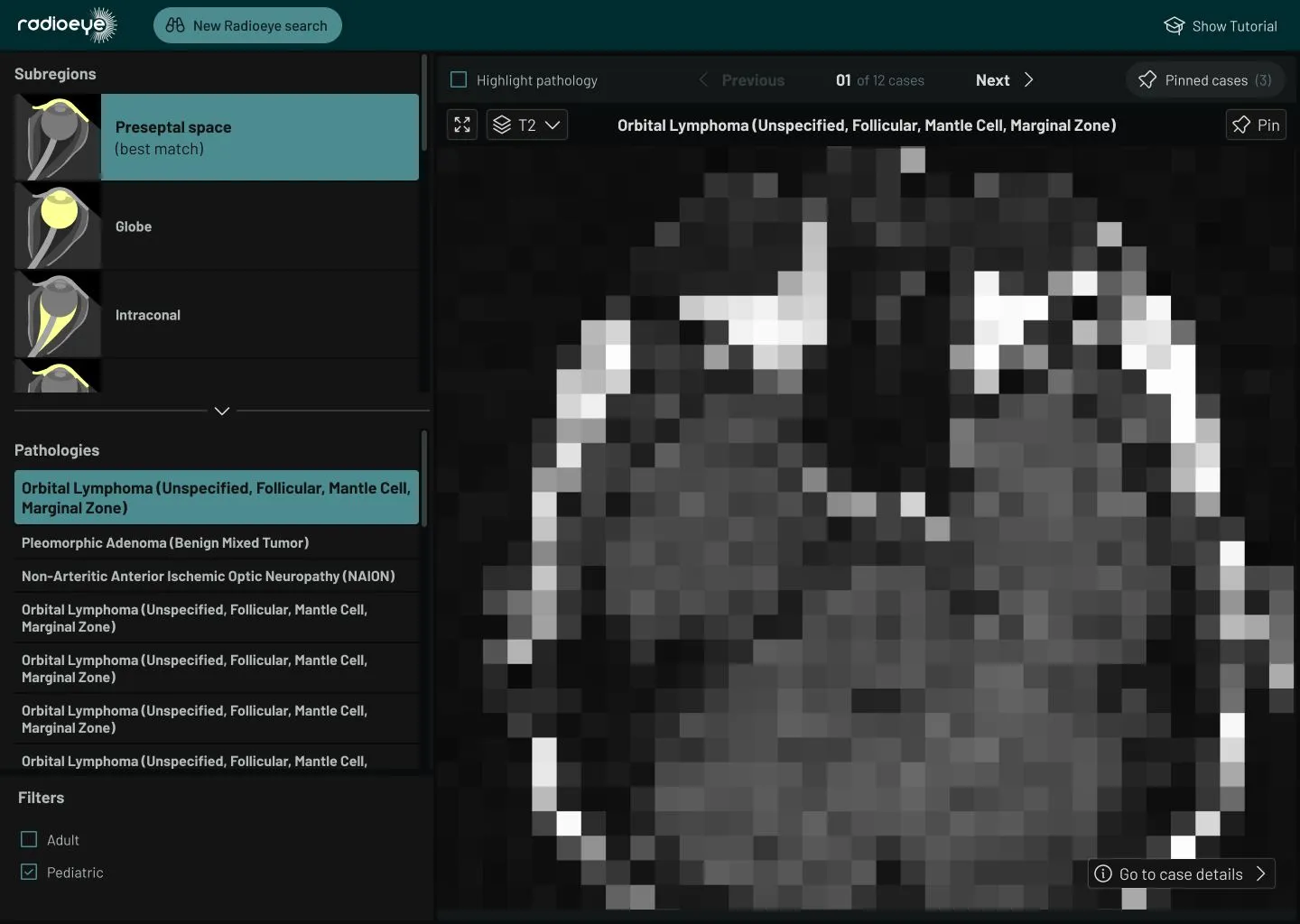
Radioeye

For centuries, the renowned research hospital Charité has pioneered advancements across a variety of medical fields. The creations of their research teams are first tested in real-world medical trials before being used in hospitals throughout Germany – treating patients and saving lives. Working with Charité, we created a product that uses machine learning (ML) techniques to assist clinicians with faster and more accurate diagnoses of eye conditions.
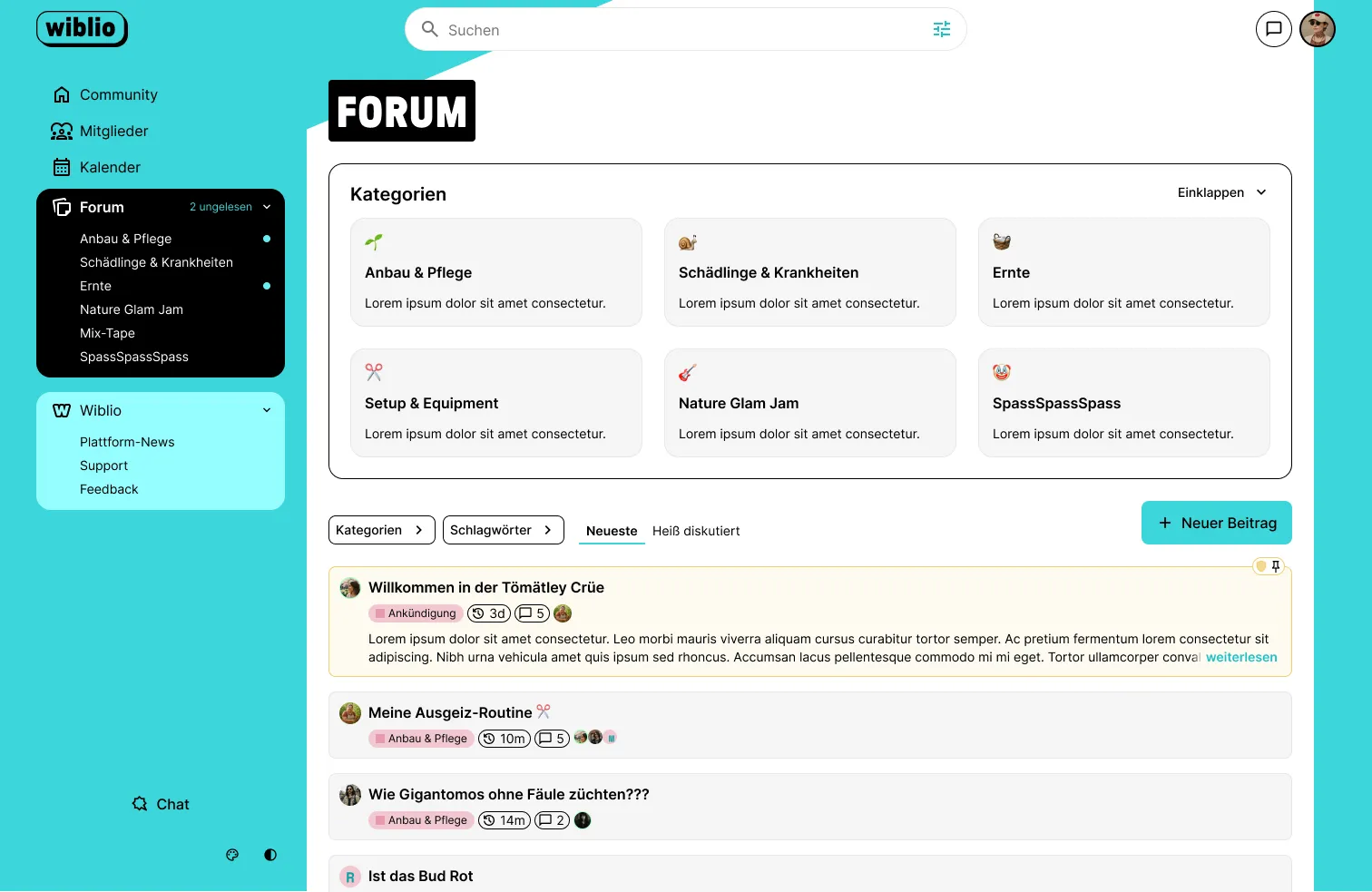
Wiblio

Berlin's libraries are the city's most visited cultural institutions. They facilitate more than 30.000 events per year, where people meet and ideas are shared. Yet the energy of these events often dissipates the moment people walk out the door. Further conversation is lost on various digital commercial platforms with unclear data protection and no connection to the library.

With Wiblio, the Zentral- und Landesbibliothek Berlin bridges the gap between physical gatherings and the digital world. Privacy-first, publicly governed, and built upon open-source software, Wiblio provides a digital extension of Berlin libraries as places for exchange and community.

Notes from the blog

Planning a project?

Let's team up and create something remarkable! Reach out to start adding detail to your ideas.

Hire us
Abstract illustration of a hand holding a pencil between the fingers and thumb, offering it