IDA

Optimized and personalized breast cancer care

The Story

Patients who’ve just received a breast cancer diagnosis are in no mental state to understand and retain the complex details of their upcoming treatments and tests, with all the branching possibilities. Because of this they often feel poorly informed and don’t always receive the best possible treatment.

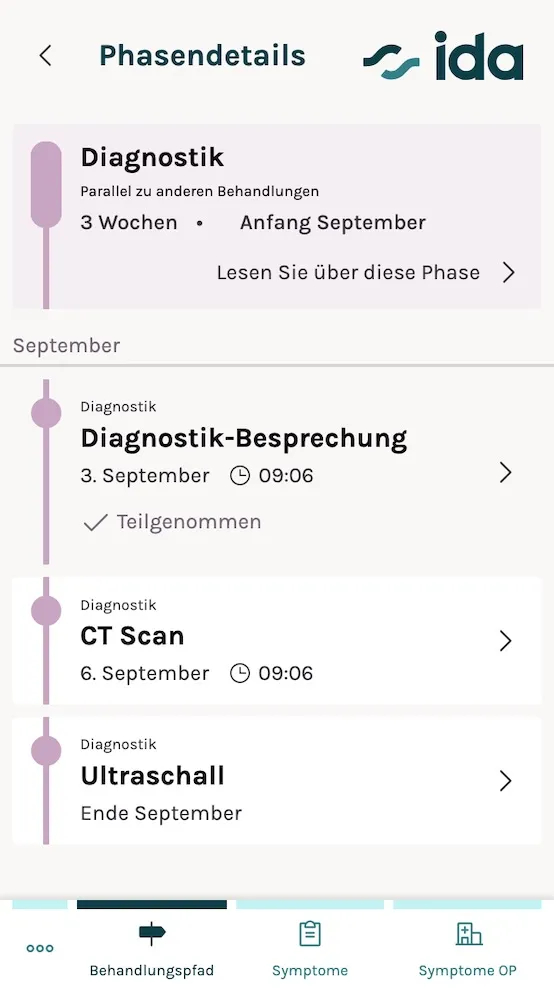
The IDA app tackles this by giving patients a clear view of their individualized care path and treatment options. Through the app, patients can easily report symptoms to their clinicians, enabling timely communication and care tailored to their specific needs.

bitcrowd worked with the IDA team on research, design, and development to create this solution.

A product for

Charité Berlin

Visit site

The Challenge

A cancer diagnosis comes with a lot of information. Understandably, patients are often stressed and in a state of alarm after receiving the diagnosis. They need to absorb and retain information about their diagnosis, while also having to keep track of examinations, appointments, treatments and decisions.

Clinicians also have the problem that they need to explain what is likely to happen over the coming months and keep an individual treatment plan up to date as new test results and decisions come in — while patients often cannot easily retain what they're told during the initial diagnosis meeting.

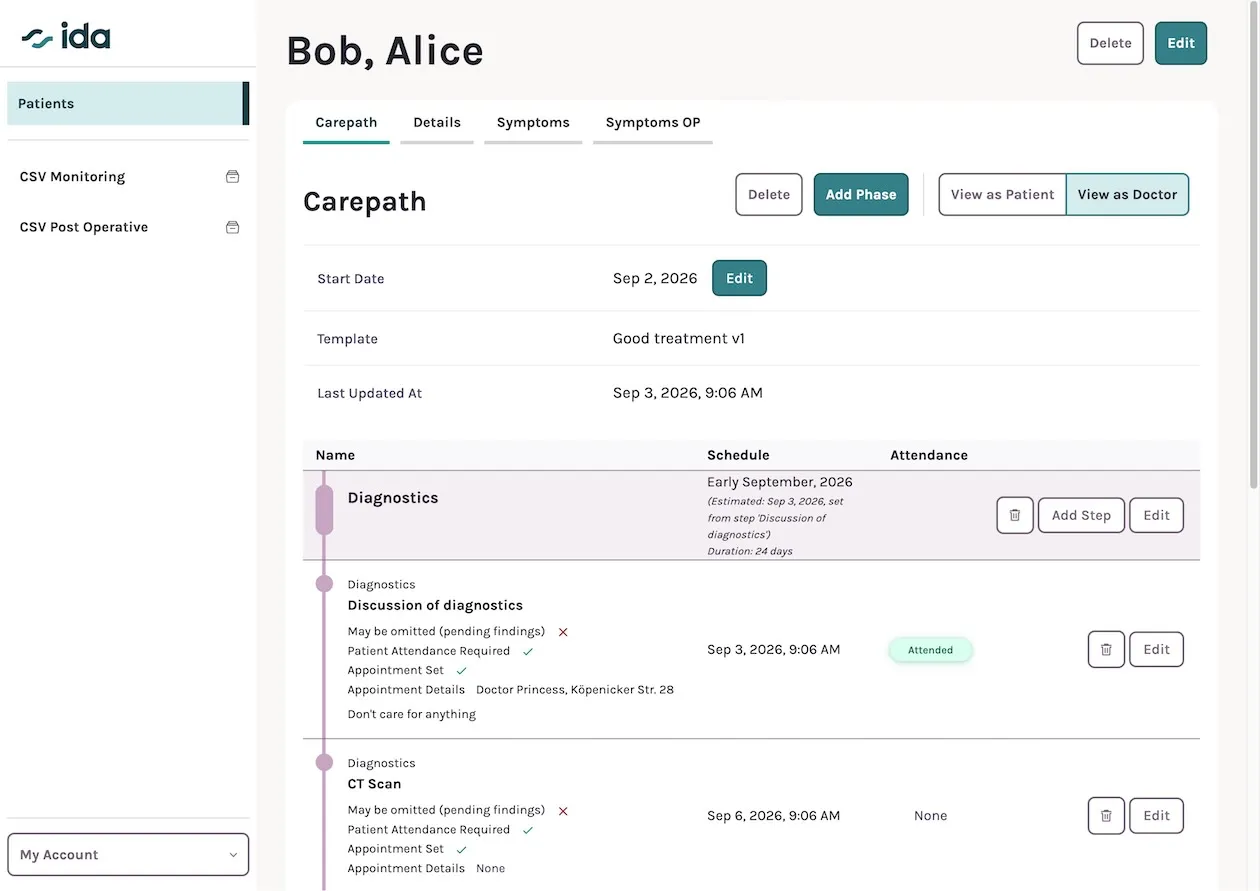
Screenshot of the ida doctor UI showing a patients carepath

The Product

IDA gives patients a detailed care plan tailored to their specific case. The plan can be updated as treatment progresses, reflecting changes made by clinicians after receiving new test results. For clinicians, a dynamic dashboard allows them to manage each patient's personal care plan and treatments, while a separate admin panel handles general system management such as treatment templates and user accounts.

We worked with the IDA team across research, specification, ideation, UX and UI design, prototyping and software development (backend and frontend).

The Collaboration

This project was a close partnership with the IDA team across research, design, and development to create a solution that addresses real challenges in cancer care. Together we built a system that simplifies communication, adapts to changes, and puts the patient at the center of their treatment journey.

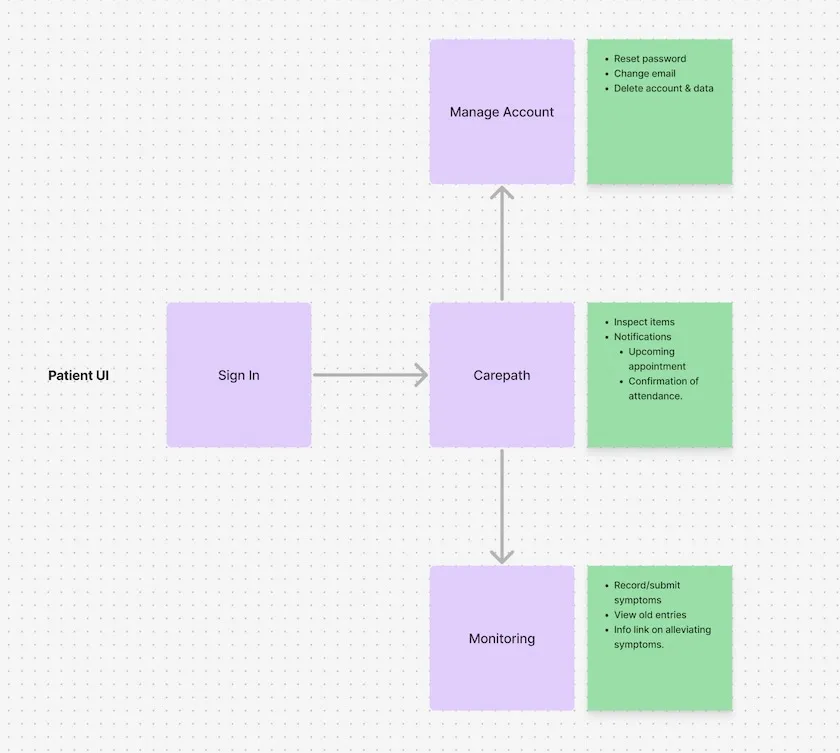
Screenmap of the patient UI: Post-it notes for each screen

Understanding the clinical workflow

We started by workshopping the product scope, requirements, and timeline with the IDA team, followed by ethnographic research with clinicians to understand how they currently interact with patients around a cancer diagnosis. Guided by our findings, we created user personas and user journey maps, which shaped the design work that followed.

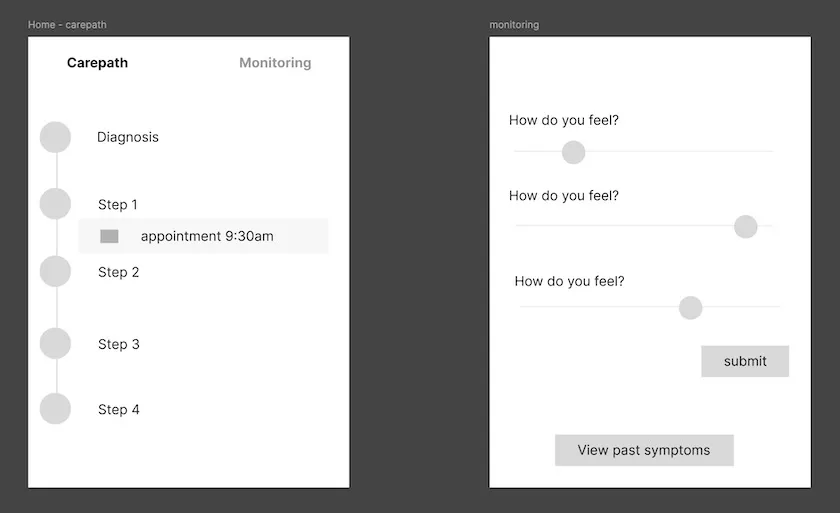
Wireframes for the patient UI's carepath and symptom screens

The IDA clinicians were involved throughout the design process. We began with a sketching workshop to work through the main screens, turned the results into digital wireframes and a click dummy prototype, and refined both based on feedback before moving into visual design. Using the wireframes as a basis, our designer created high-fidelity UI screens, defining the visual language, component library and interaction details that carried through to the final application design.

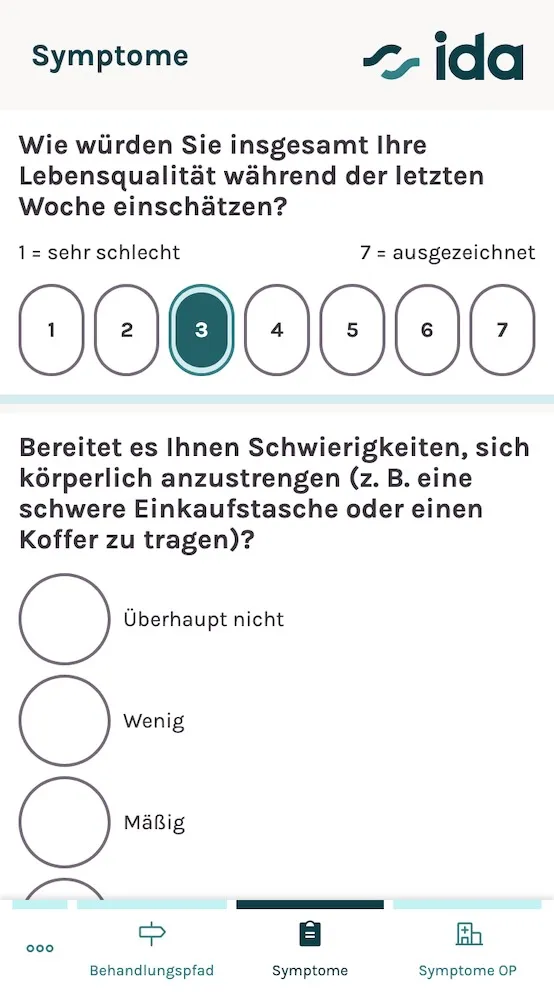
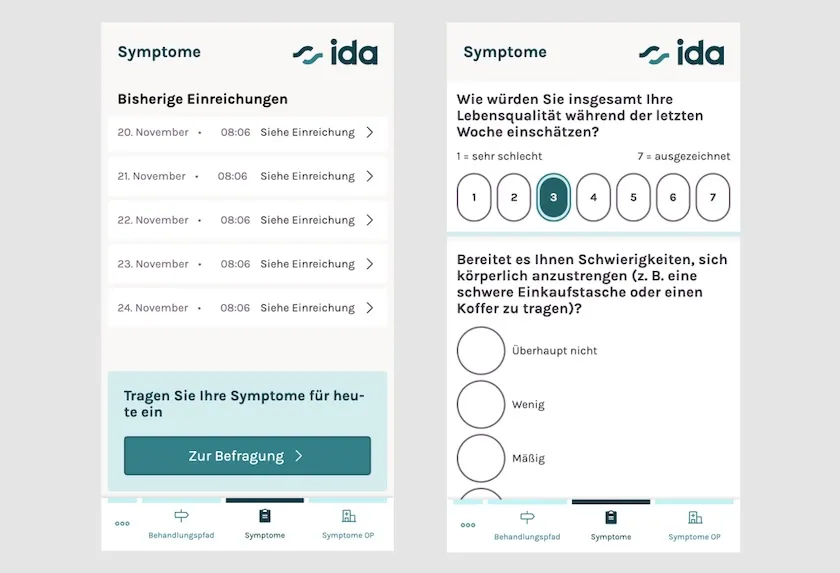
Screenshots of the ida patient UI showing the symptom list and form

Roles – designing for different users

IDA has three user roles: patients, clinicians and administrators. Each role has its own interface and permissions.

Patients use a React-based Progressive Web App to access their care plan on their phone, tablet or desktop. They can view their personalized care plan and treatment appointments, report symptoms, access guidance for symptom management and maintain personal notes.

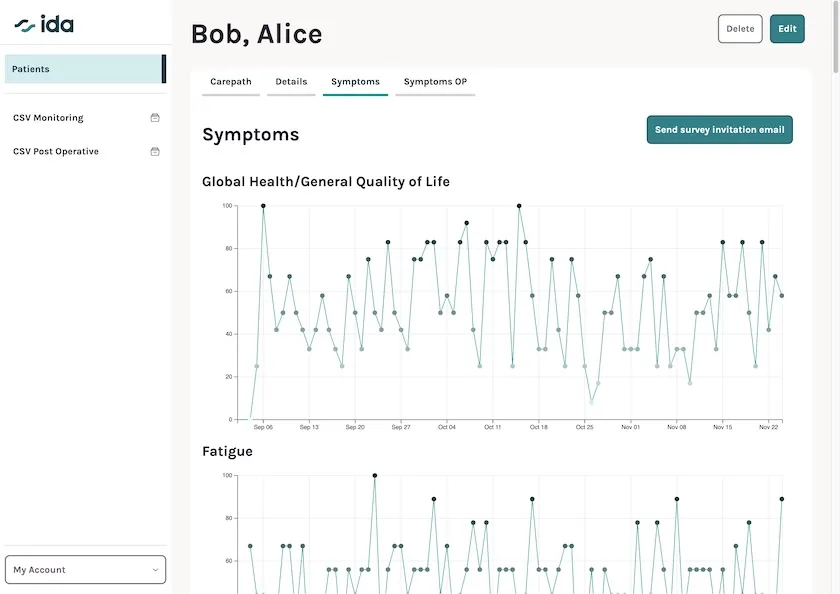
Screenshot of the ida doctor UI showing a patient's symptoms

Clinicians use a dynamic dashboard to manage their patients and their individual care plans. They can add new patients, create and adjust care plans, monitor reported symptoms, track treatment appointments and review progress.

Using a templating system bitcrowd built into the clinicians’ dashboard, new carepaths can be quickly created following one of the common possiblities, and customised as needed for the current patient.

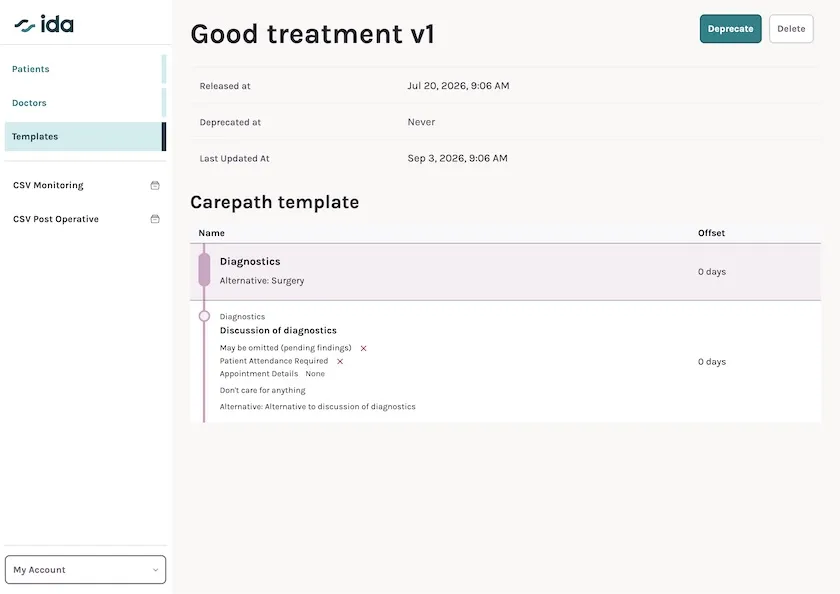
Screenshot of the ida admin UI showing a carepath template

Administrators manage users and system configuration. They can create and manage treatment pathway templates, keep track of their versions and oversee user access, patient data and clinician accounts.

Using role-based access control, we keep the three areas of the application securely separated.

Screenshot of the edit button on a patient carepath in the ida doctor UI

Keeping the care plan up to date

A treatment pathway is not necessarily fixed. Test results can change decisions, appointments can move, and new symptoms can require an adjustment. IDA treats the care plan as something that can change over time. Clinicians can update an individual patient's pathway as treatment progresses, and patients can see the current version of their plan. So when a clinician changes a care plan, the patient's view is updated accordingly.

Technical architecture

The IDA application is built around an Elixir/Phoenix backend for admins and clinicians, and a React JS Progressive Web Application (PWA) for patients. We built this web application mobile-first and responsive, to work across different devices and screen sizes. The PWA interfaces securely with patient data and care plans through a GraphQL API we built into the Elixir backend, which also manages users, care plans and treatment templates. Role-based access controls determine which parts of the system each user can access.

The result

IDA brings the patient and clinician sides of the care-plan workflow into one system, built around a treatment process that can change over time, rather than a fixed sequence of steps.

More past projects

Radioeye

Berlin Institute of Health

For centuries the research hospital Charité has been renowned for its pioneering work across many different medical fields. Products created by their research teams are tested in real-world medical trials, before being launched in hospitals throughout Germany – treating people and saving lives.

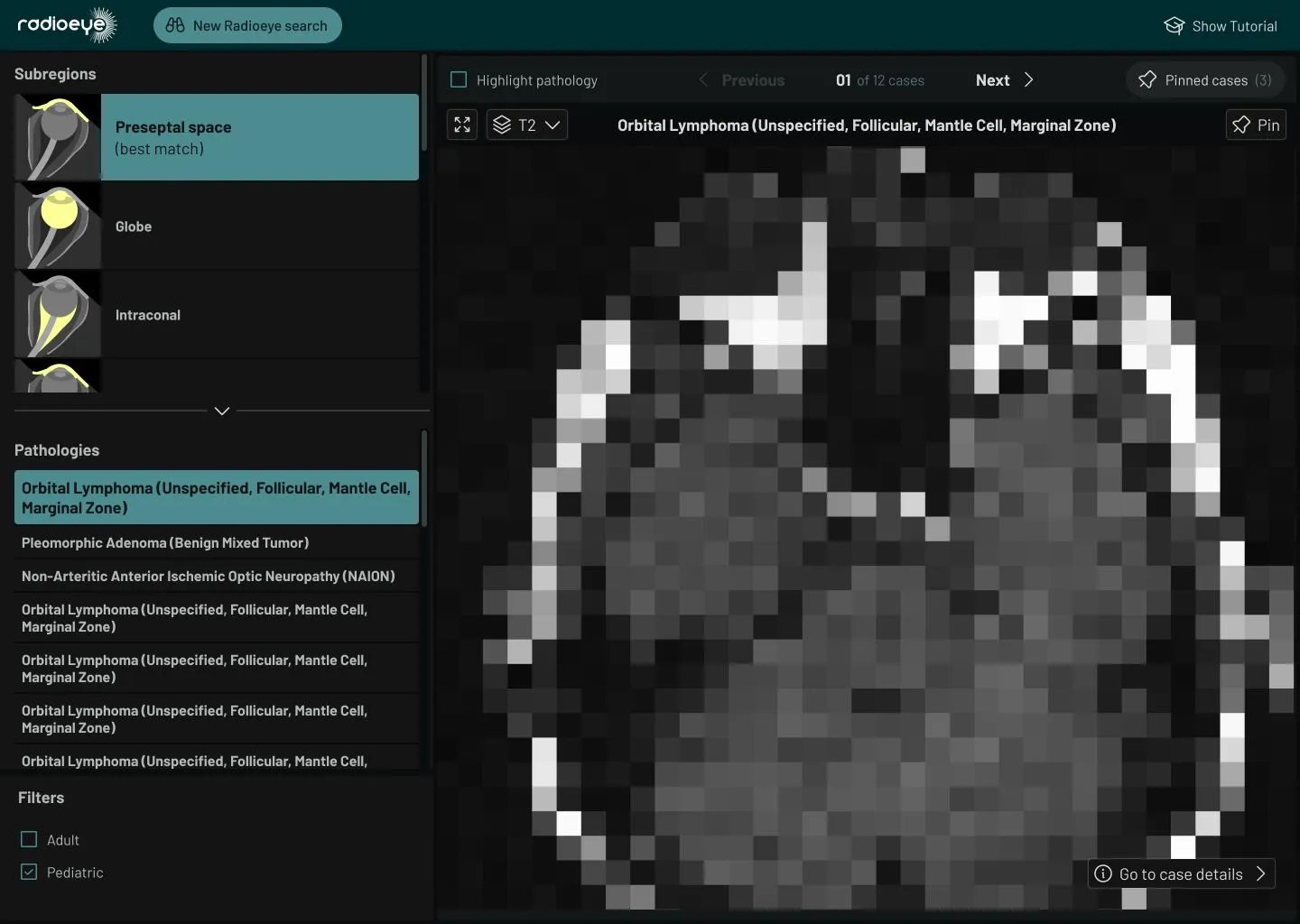
The research collected by Charité radiologists was used to train a machine learning (ML) model, allowing clinicians to more quickly and accurately diagnose eye conditions. With bitcrowd’s help to workshop, design, and build an expressive UI, clinicians no longer need to search through printed textbooks or looking up previous cases in Charité databases — they can now upload MRI scans to Radioeye, receiving possible diagnoses along with case history and fully-navigable scans.

Released: July 2023

Learn moreabout Radioeye